- Momentum Notes
- Posts
- Building Your “Digital Mind”: Personal Knowledge Bases in the Age of AI
Building Your “Digital Mind”: Personal Knowledge Bases in the Age of AI
How to turn your ideas, notes, and writing into an intelligent partner that helps you think, create, and grow.

Tyler Rasdon
October 15, 2025
In partnership with

Wednesday | October 15th, 2025
AI just took another leap — and this one changes how we build, work, and even think.
In this week’s ⚡️Signal Report, we unpack five pivotal shifts:
OpenAI turns ChatGPT into a full app platform, signaling the rise of AI as an operating system for intelligent work.
California’s new AI disclosure law pushes transparency to the forefront.
Bubble warnings from industry leaders remind us that the next wave of AI growth will favor strategy over hype.
Europe’s €500M bet on AI sovereignty accelerates its local infrastructure push.
And data-leak risks from AI tools highlight why governance now equals growth.
Together, these stories point to one clear truth: the frontier of creativity and business is no longer about using AI — it’s about building with it.
That’s why this week’s main essay explores a more personal frontier: 👉 “Building Your Digital Mind: Personal Knowledge Bases in the Age of AI.”
What if you could talk to a version of yourself that remembers everything you’ve ever written or said? We’ll explore how to build your own Digital Mind — a private, AI-augmented version of your thinking that helps you brainstorm, write, and create with deeper context and less friction.
This week is about one big idea: AI as an extension of human intelligence — not a replacement for it.
Let’s dive in.
“The tools we use to think change the ways we think.”
The AI Wearable That Makes Your Life Unforgettable

Your greatest asset is your time. So stop wasting it jotting notes or chasing forgotten conversations.
The Limitless AI Pendant captures, transcribes, and organizes every meaningful interaction automatically. Get instantly searchable transcripts, smart summaries, and contextual reminders - all at your fingertips, all fully encrypted.
Tap into the future of productivity and free your mind to focus on what truly matters with Limitless.
The Signal Report
1. OpenAI turns ChatGPT into a full app platform
At DevDay, OpenAI unveiled Apps in ChatGPT, letting users run tools like Spotify, Canva, and Zillow directly in chat — with a built-in app store coming soon. It also launched AgentKit, enabling developers to build autonomous agents that can act across systems and workflows.
Key Takeaway: ChatGPT is becoming an operating system for intelligent work, opening new ways for builders to create and monetize experiences inside AI.
Source: OpenAI | TechCrunch
2. California mandates AI disclosure in chatbots
A new California law now requires chatbots to clearly identify as AI, especially when used by minors or in sensitive interactions.
Key Takeaway: Transparency is becoming law. Creators embedding AI tools will need visible disclosure and safety design baked in.
Source: The Verge
3. AI bubble warnings grow louder
Pat Gelsinger and the Bank of England both cautioned that current AI valuations show “bubble-like” behavior — though the correction may come gradually.
Key Takeaway: Expect funding discipline and ROI scrutiny to define the next phase of AI growth.
Source: Business Insider
4. Europe invests €500M in new AI “Factories”
The EU announced funding for six new regional AI Factories — hubs offering compute, data, and research infrastructure for startups and governments.
Key Takeaway: Europe is betting on AI sovereignty, prioritizing local infrastructure over dependence on U.S. platforms.
Source: Innovation News Network
5. AI tools now top global data-leak risks
A new security study found 77% of data leaks linked to AI tools come from employees pasting sensitive info into unmanaged chatbots.
Key Takeaway: Data hygiene and AI governance are now core business strategy — not just IT maintenance.
Source: The Hacker News
OpenAI’s pivot signals a power shift: AI is moving from assistant to platform — a layer where apps, agents, and transactions all converge. For modern builders, this is a cue to design inside the AI layer — crafting tools, experiences, or systems that integrate seamlessly into users’ intelligent workflows.
“Man is not a machine, but man uses machines to amplify his own intelligence.”
Building Your “Digital Mind”: Personal Knowledge Bases in the Age of AI
What if you could talk to a version of yourself that remembers everything you’ve ever written or said?
Imagine opening your laptop and chatting with a version of yourself that’s read all your journal entries, every client memo, every blog post, every half-baked idea you’ve ever tucked away in Notion or Apple Notes.
This “you” remembers it all.
It can connect the dots between a 2018 tweet and a 2023 business insight.
It can brainstorm in your voice, write in your tone, and help you think faster without losing depth.
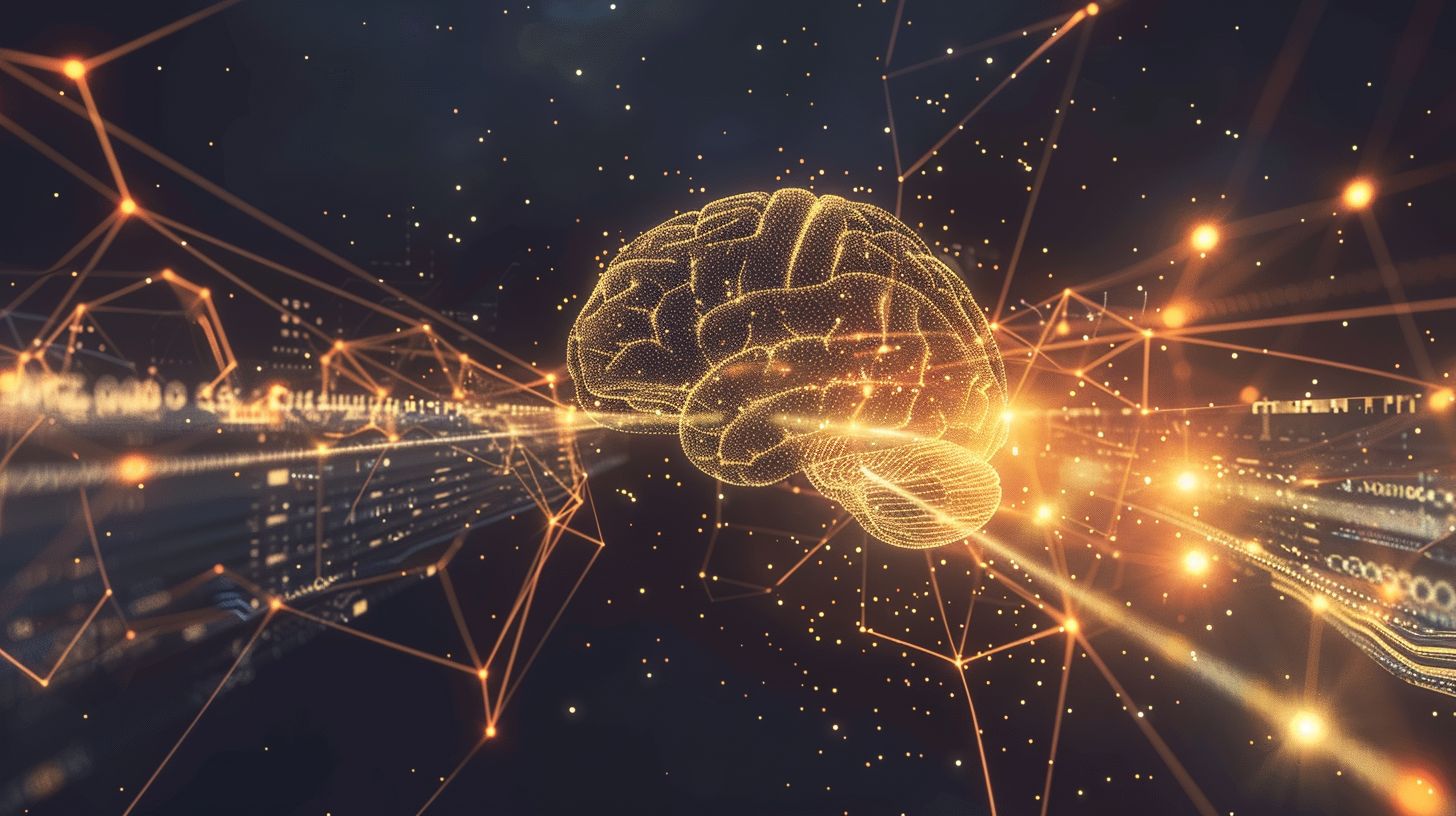
That’s not a sci-fi fantasy anymore. It’s what’s now possible through personal knowledge bases powered by AI — what I call your Digital Mind.
The Shift: From “Second Brain” to “Digital Mind”
For years, the “second brain” movement helped creators and entrepreneurs organize their ideas. Tools like Notion, Obsidian, and Roam became digital filing cabinets for our thoughts — searchable archives of notes and bookmarks.
But AI changes the equation.
We’re moving from storage to conversation.
From organizing information to interacting with it.
A Digital Mind is a step beyond a second brain. It’s not just where your knowledge lives; it’s a thinking partner that uses that knowledge with you.
Here’s the key difference:
Concept | What It Does | Your Role |
|---|---|---|
Second Brain | Stores and organizes your information | You have to find and connect ideas manually |
Digital Mind | Understands and reasons across your information | You collaborate with it to generate insight, content, or strategy |
In other words, you’re not just building a database — you’re building a dialogue with your past self.
How It Works: Extending Your Mind
A “Digital Mind” is essentially a custom AI model trained on your personal knowledge — your notes, essays, talks, books, or transcripts. Think of it as cloning your context, not your personality.
The process is surprisingly simple:
Gather your intellectual raw material.
Collect everything you’ve created — past writing, newsletters, talks, client docs, notes. The goal isn’t perfection; it’s context density. The more signal you feed it, the smarter your digital mind becomes.Feed it into a private AI model.
Platforms like OpenAI’s GPTs, Mem, Rewind, or custom RAG systems can embed and index your content securely. You’re not training a model from scratch; you’re giving a foundation model a “memory” of you.Start a conversation.
Ask it to brainstorm article ideas based on your past writing. Summarize your frameworks. Reimagine your old essays into new angles. The key is dialogue — the AI helps you think with your own accumulated wisdom.Iterate and evolve.
As you create more, feed it back in. Your Digital Mind becomes a living archive — an extension of your creative identity.
Why This Matters: Knowledge Leverage
In the next few years, every creator and entrepreneur will have some version of a Digital Mind — and those who don’t will feel like they’re thinking on half their bandwidth.
Why? Because the leverage isn’t just in automation — it’s in amplification.
A Digital Mind gives you three new forms of leverage:
Memory Leverage – It remembers what you forget.
You no longer lose valuable insights to old notebooks or Slack threads. Your AI recalls everything and can surface it on demand.Context Leverage – It connects ideas across time.
It can say, “You mentioned this concept two years ago — here’s how it links to what you’re exploring now.”Creative Leverage – It helps you scale your voice.
You can brainstorm faster, outline projects in your tone, or repurpose your thinking across formats. It’s like having an assistant who deeply “gets” you.
This isn’t about replacing creativity — it’s about removing friction between thinking and expression.
It’s creativity at the speed of recall.
The Deeper Opportunity: Designing Your Cognitive Interface
The technology is impressive, but the real shift is philosophical.
You’re no longer just managing tools — you’re designing an interface for your own mind.
When built thoughtfully, your Digital Mind becomes:
A mirror for your evolving ideas.
A collaborator that keeps you intellectually honest.
A scaffold that preserves your best thinking as you grow.
It’s a way to externalize your cognition — to think beyond the limits of memory and attention.
But this also raises new responsibilities:
How do you curate what you feed it?
How do you balance privacy with utility?
How do you ensure it amplifies your best thinking, not your biases?
Building a Digital Mind isn’t just a technical project — it’s a practice of digital self-awareness.
How to Start Building Yours
If you want to experiment with your own Digital Mind, here’s a simple roadmap:
Create a central “knowledge dump.”
Export your key notes, docs, writing, and transcripts into one folder. Don’t organize — just collect.Choose a tool that lets you build private memory.
Define your “mind map.”
Create a few key prompts or roles — e.g., “Brand strategist version of me,” “Writer version of me,” or “Coach version of me.” Each can think from a different lens.Use it daily.
Don’t just ask it for answers — think with it. Use it to explore, reframe, and remix your ideas.
Talk to Your Future Self
A Digital Mind isn’t just a way to store what you know. It’s a way to grow what you know.
Every note, essay, and reflection you’ve ever written is raw material for your future intelligence.
And now, for the first time, you can talk to it.
The more you engage, the more this version of yourself evolves — not as a copy, but as a companion.
The question is no longer “Can AI think for me?”
It’s “How do I want to think with it?”